
Peg Board
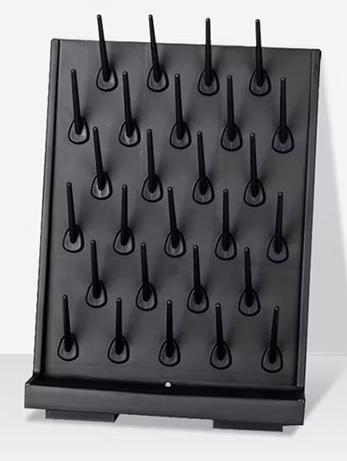
A laboratory peg board is a versatile tool, typically a flat board with regularly spaced holes, used for organizing and storing various lab equipment and supplies. It often features pegs or hooks that can be inserted into the holes to hang items, facilitating efficient drying and storage of glassware and other tools. Pegboards are commonly found near sinks for drying glassware after cleaning.
Here's a more detailed description:
-
Purpose:
Pegboards in laboratories primarily serve as a practical drying rack for glassware like beakers, flasks, and test tubes after washing. They also help in organizing and storing frequently used tools and equipment, making them easily accessible and visible.
-
Construction:
They are typically made from durable materials like stainless steel, acrylic, or polypropylene, known for their resistance to corrosion and wear and tear. Some may feature a stainless steel frame with a polypropylene or acrylic board.
-
Design:
Pegboards feature a grid of holes, often with a standard 1-inch spacing, and can accommodate various peg sizes and types. Some pegboards include drip troughs or drain grids to collect excess water from drying items.
-
Benefits:
- Efficient Drying: Pegboards allow for proper air circulation around glassware, facilitating faster and more hygienic drying.
- Organization: They help keep the lab space tidy and organized by providing a designated area for storing frequently used items.
- Accessibility: Pegboards make it easy to locate and retrieve necessary tools and equipment during experiments.
- Space Optimization: They can be wall-mounted, optimizing valuable bench space in the lab.
-
Materials:
Pegboards can be made from various materials:- Stainless Steel: Provides excellent durability and resistance to corrosion.
- Acrylic: Offers good visibility and is relatively lightweight.
- Polypropylene: Known for its chemical resistance.
- Epoxy Resin: Offers superior chemical and heat resistance.
-
Additional Features:
Some pegboards may include:- Detachable pegs: For easy customization and storage.
- Screen inserts: To hold smaller items or prevent them from falling through.
- Drip troughs: To collect water and prevent spills.
-
Placement:
Pegboards are often positioned near sinks or other water sources, making them readily accessible for post-wash drying.
-
Example:
A common configuration is a stainless steel pegboard with a drip trough, designed for mounting on the wall near the sink area.